Dress the Part You Want: How Personal Style Became a Career Power Move
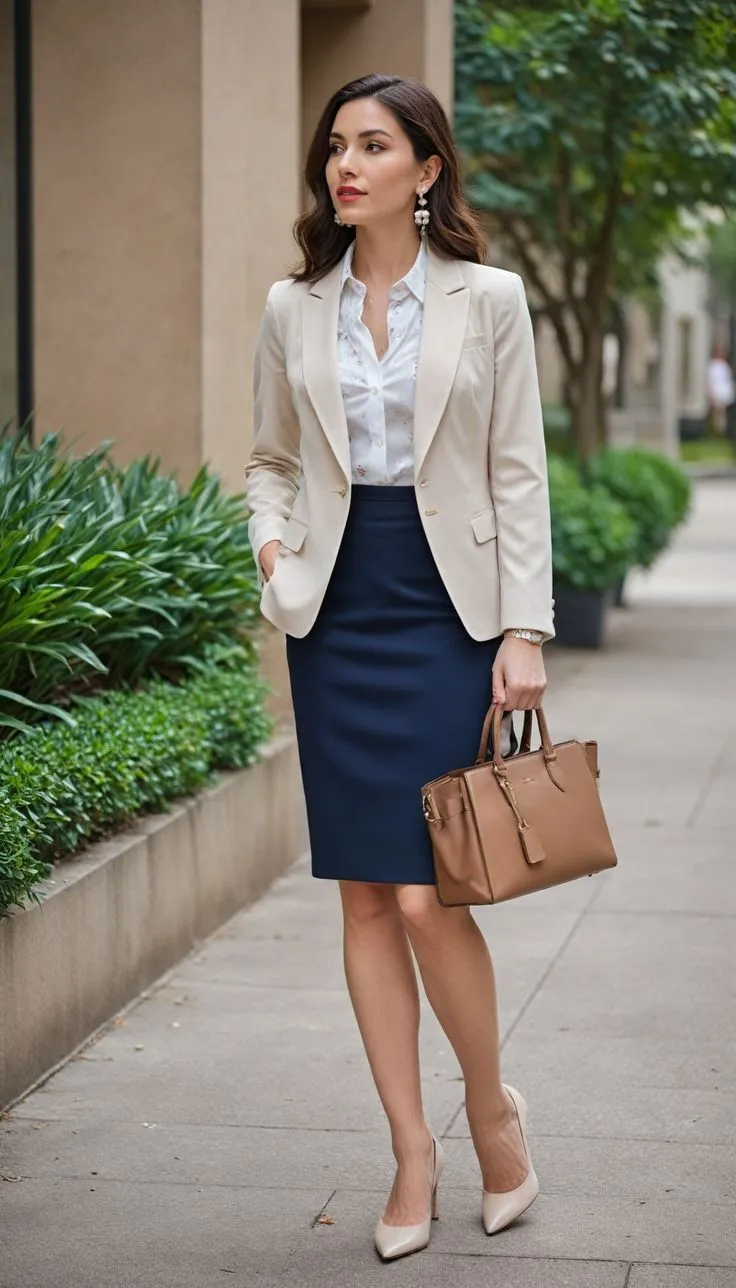
Photo: confident professional woman fashion power dressing business style, via i.pinimg.com
Let's be honest about something the fashion world has always known but the professional world has been slow to admit: the way you present yourself is a form of language. Before you say a word in a room, your image has already started the conversation.
For women in entertainment especially, that conversation is happening constantly — on set, on stage, on social media, in every photo that circulates under your name. The question isn't whether your visual identity is communicating something. It always is. The real question is whether you're the one controlling the message.
Style Is Not Superficial
There's a persistent cultural myth that caring about your appearance is somehow at odds with being taken seriously. That real substance should speak for itself, that focusing on aesthetics is vain or trivial. It's a narrative that has historically been used to dismiss women who invest in their image — and it's also completely disconnected from how the world actually works.
Research in social psychology has consistently shown that visual presentation influences perception in significant, lasting ways. A 2019 study out of Princeton found that people form impressions of competence, warmth, and trustworthiness within milliseconds of seeing someone — long before any verbal exchange takes place. In an industry built on first impressions and personal brand, dismissing style as shallow isn't just inaccurate. It's a strategic disadvantage.
Image consultant and brand strategist Tara Ellison, who has worked with clients across entertainment, sports, and media in New York, frames it this way: "Style, when it's intentional, is one of the most efficient communication tools you have. It signals your values, your confidence, your understanding of context. It tells people who you are before you've had to explain it. That's not vanity — that's strategy."
The Difference Between Dressing Up and Dressing With Purpose
There's a meaningful distinction between wearing clothes and building a visual identity. The first is something everyone does. The second is something far fewer people actually think through.
Building a visual identity means understanding what you want to communicate — and then making deliberate choices that reinforce that message consistently. It means knowing your audience, your context, and your goals, and letting those factors inform your aesthetic decisions rather than just following trends or defaulting to what's comfortable.
Consider the career arc of someone like Janelle Monáe. Her visual choices — the black-and-white palette, the architectural silhouettes, the deliberate futurism — aren't incidental. They're deeply integrated into her artistic identity and her public persona. She doesn't just wear interesting clothes. She uses her image to tell a story that's entirely consistent with her music, her values, and her brand. The result is a visual identity so distinct and intentional that it functions almost like a signature.
You don't need a stylist and a record deal to apply this thinking. The principle scales to any professional context.
What Intentional Style Actually Looks Like
For Michelle Torres, a Chicago-based television producer who spent years feeling overlooked in rooms dominated by men, the shift came when she stopped dressing to blend in and started dressing to be remembered.
"I used to default to neutral, professional, forgettable," she says. "I thought the work should speak for itself and that dressing too distinctly would distract from it. What I eventually realized was that 'forgettable' wasn't neutral — it was a choice that was actively working against me. I was in rooms where people needed to remember me, trust me, see me as a leader. My image wasn't supporting any of that."
Michelle started working with a personal stylist to develop what she describes as a "visual vocabulary" — a consistent set of colors, silhouettes, and details that felt authentically like her while also communicating authority and presence. Within a year, she noticed tangible differences. More invitations to the table. Easier initial rapport in new professional relationships. A stronger sense of personal confidence that she credits, at least in part, to feeling genuinely aligned with how she was presenting herself.
"It sounds almost too simple," she admits. "But there's something powerful about walking into a room and knowing that everything about how you're showing up is intentional. It changes your energy. And people respond to that."
Authenticity Is the Non-Negotiable
Here's where the strategy conversation has to get personal: the most powerful visual identity is one that's genuinely yours.
There's a version of image-building that's purely performative — adopting the aesthetic you think will open doors, regardless of whether it actually reflects who you are. And while that might create short-term impressions, it's exhausting to maintain and ultimately unconvincing. People are remarkably good at sensing inauthenticity, even when they can't articulate exactly what feels off.
The goal isn't to construct a character. It's to amplify the real thing.
Tara Ellison describes her process with clients as starting from the inside out. "Before we talk about clothing at all, I want to know: What are your values? What do you want people to feel when they interact with you? What parts of your personality do you feel like aren't coming through in how you currently present? The answers to those questions become the foundation. The clothes come after."
Practical Starting Points
If you're ready to start treating your image as the strategic asset it is, here are a few concrete places to begin:
Do a visual audit. Look at recent photos of yourself in professional contexts. Does what you see align with how you want to be perceived? If there's a gap, that's useful information — not a criticism, just a starting point.
Identify your non-negotiables. What elements of your personal style feel genuinely like you and need to stay? What are you currently wearing out of habit or obligation rather than choice? Getting clear on this makes intentional building much easier.
Study the people you admire. Not to copy them, but to understand what their visual choices are communicating and why it works. What's consistent? What's intentional? What does their image say before they say anything?
Invest in a few key pieces rather than a full overhaul. A coherent, intentional wardrobe doesn't require starting from scratch. Often it's about editing — removing the things that don't serve your brand — and adding a few anchoring pieces that do.
Align your digital presence. In 2024, your visual identity extends far beyond what you wear in person. Your headshots, your social media aesthetic, even your color palette all contribute to the overall image you're projecting. Consistency across those touchpoints amplifies the signal.
The Bottom Line
Personal style, approached with intention, is one of the few professional tools that works for you around the clock. It communicates before you speak, reinforces your message while you're speaking, and leaves an impression long after you've left the room.
For women in entertainment — and honestly, in any field where visibility matters — treating image as an afterthought is leaving real influence on the table.
You've already got a visual identity. The only question is whether it's telling the story you actually want told.